Think of automation as a spectrum. On one end, you do everything by hand. On the other end, the work happens without you.
When you build with AI agents, you should always be pushing toward the automated end. But you will never actually get to full automation, just progressively closer and closer, asymptotically. You're trying to make today's process a little more automated than yesterday's. Then you do it again, and again.
1Most people are still chopping with an axe
Consider someone cutting down a tree with an axe. It's slow, exhausting, and completely manual.
Now hand them a chainsaw. They're still standing there holding the tool and watching the cut the whole time. But they're done many times faster.
Go further and you get a forestry harvester. One operator sits in the cab while the machine clamps the tree and cuts it down in seconds. Further still, consider a fleet of harvesters with nobody in the cabs and one person watching all of them from a screen. And at the very end, a fleet that runs with no humans at all, not even someone watching.
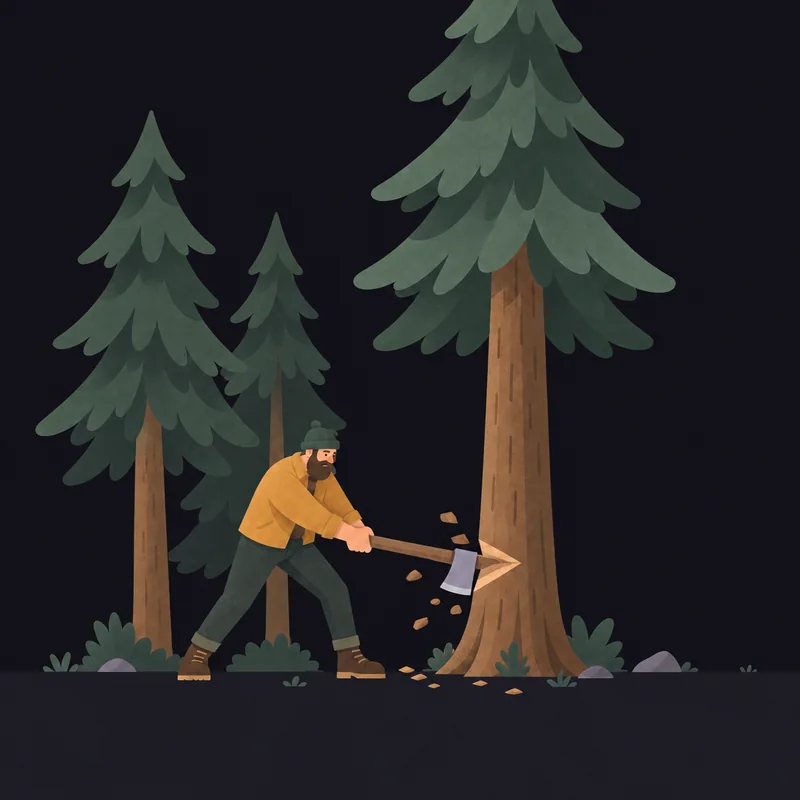
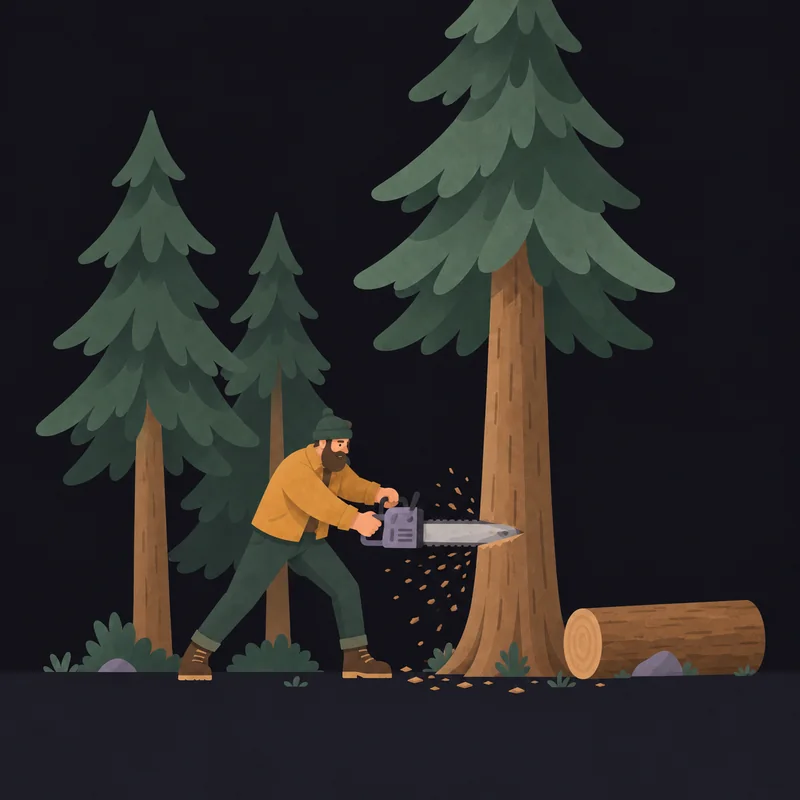
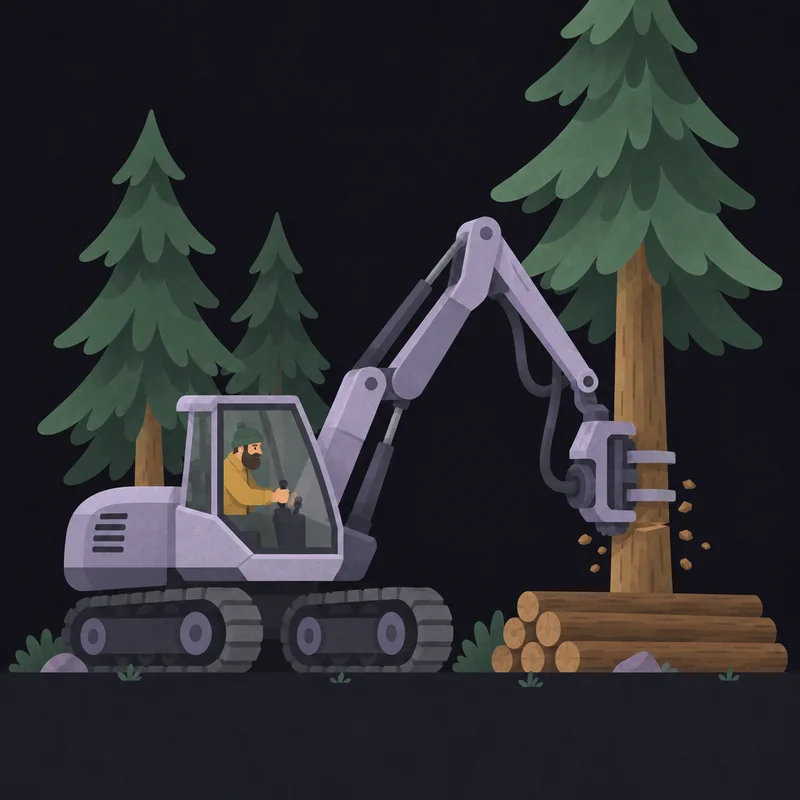
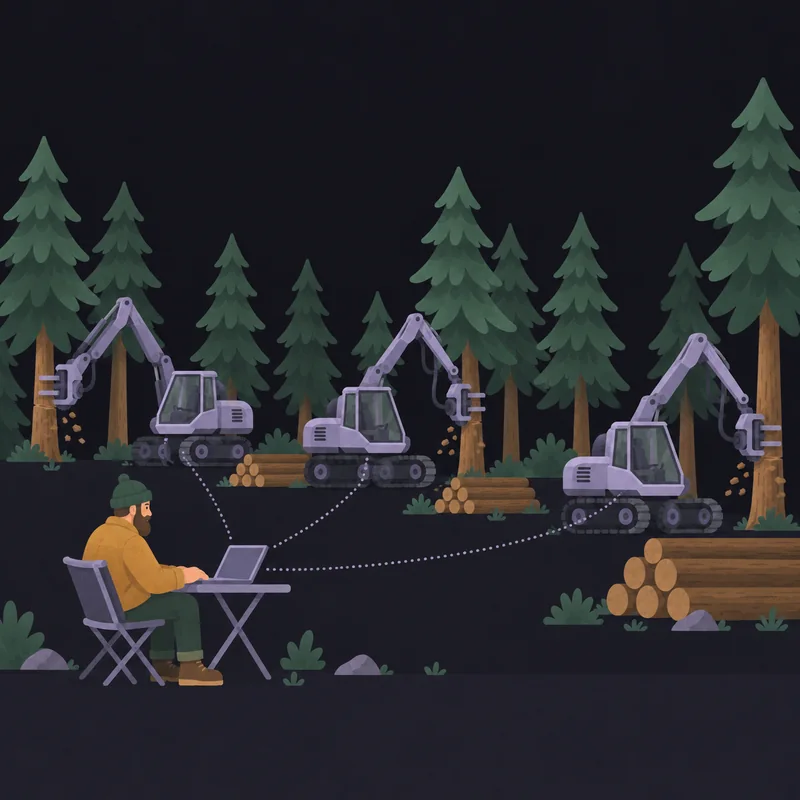
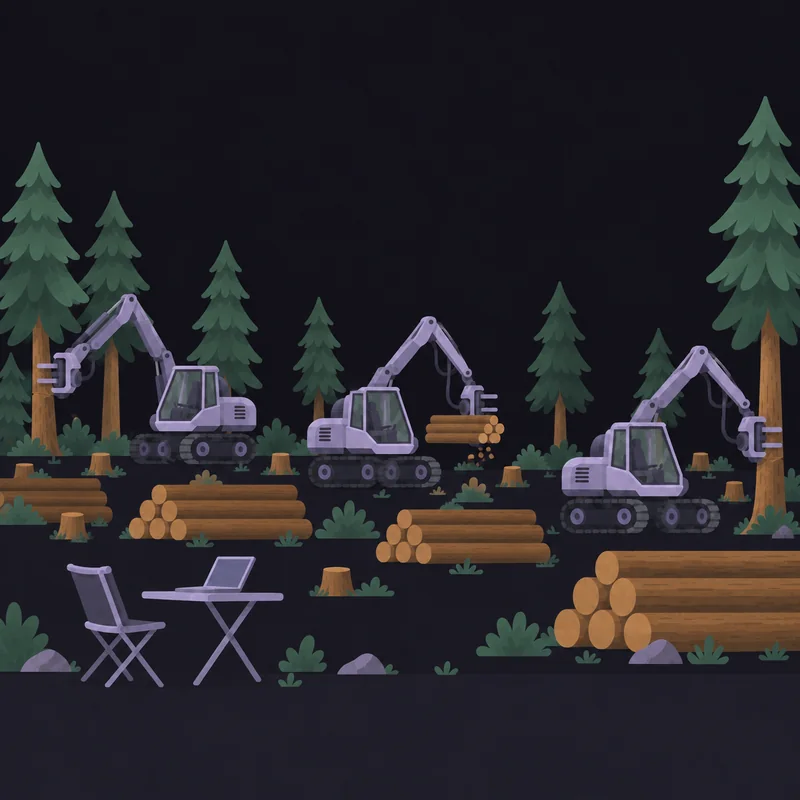
For most tasks on a computer, people are still using the axe. The most important thing you can do right now is pick up the chainsaw. From there, every improvement moves you a little further along: the harvester, then the fleet. The last step, with nobody in the loop at all, stays out of reach until AI can operate fully on its own. You don't need to get there for this to pay off. Every step along the way is more leverage.
2What the chainsaw looks like today
With where models and harnesses are right now, the chainsaw is simple:
- Use a good harness, like Claude Code or Codex.
- Give it as much context as possible: your email, your chat, your docs, your meeting transcripts.
- Work through the task together.
The agent isn't running on its own. You start the task with a prompt, and you stay in the loop. But what used to be a multi-hour slog becomes a 30-minute session where you're only focused on it for about five minutes, broken up to give the agent feedback. And while it works, you can run a few other tasks in parallel.
3You can build your own chainsaw now
Before 2024, building a chainsaw was an entire full-time job. It took lots of smart software engineers and entire companies. That's what software as a service was for. If you were a user, you weren't going to make your own chainsaw. Someone else had to make it for you.
Before 2026, it was possible to make your own chainsaw, but it was also quite dangerous. You were very likely to chop your arm off.
Now it's pretty safe for anybody who's reasonably competent to build their own chainsaw, fast, while they're doing the job that needs it. So even if you're under time pressure and overworked, building your own chainsaw and using it will give you time back within a few days. The payback period is measured in days.
4You can't build the robot first
Say you do want the fully automated version. You still can't design it today.
Think about every edge case that will come up for that system over the next year. You can't foresee all of them, and you can't pretend to. If you try, you'll spend days building the wrong thing.
The only way to find the problems of heavy automation is to run into them while using lighter automation. So build something with a lot of automation and use it for a week. Then ask: what routine steps am I still doing? What rough shape do my inputs take? Add a layer that handles those. Use that for a few weeks and ask again: over the last month, why did I have to step in?
5What the climb looks like
Here's roughly how this plays out. Each step fixes the problem you ran into on the one before.
Step 1Have the agent do it while you supervise. Take a task you'd normally do by hand and ask Codex to do it while you watch.
What you'll hit: it can't find the context it needs.
Step 2Give it your context. Connect it to your email, chat, and documents. Now it can find almost everything about the task, and it gets genuinely useful.
Then you'll notice what's still missing. Maybe the most important conversation about this task happened in person, with no transcript or notes. That tells you to get better at putting your important conversations into text the agent can read. I wrote about that in Stop Playing Telephone with AI Agents.
What you'll hit: the agent can help with everything except actually doing anything. Every action is still yours.
Step 3Let it stage the action. The agent writes a great email. Then you open your inbox, paste it in, fix the formatting, fill in the To and BCC fields, and hit send. That's friction. Give it the tools to create the draft in the right thread instead, so all you do is hit send. That's something like a 5x improvement on that step.
One caution. If an agent writes a long message for you, don't send it as if you wrote it yourself. Make it clear what's AI output and what's you talking. Those mean very different things to the person reading.
What you'll hit: you still have to remember every task and kick it off. Then you wait a few minutes while the agent gathers context, get distracted, and forget.
Step 4Let it come to you. Keep a list of your tasks, and have the agent message you on a schedule: here's what needs doing, I've already done the research, here's what I think the next action is. What do you think?
Now you wake up, read the message, and reply "looks good, send it." You didn't even start that task. All you did was click a button.
What you'll hit: calibration.
Step 5Tune it, forever. How often should it check in? Add a lot of tasks and you'll wake up buried in messages. Some of its recommended actions will just be wrong because it's missing context, so you add connectors. You'll write skill files that teach it to be concise, to sound like you, and to stop producing things that look like AI slop.
Some fixes are quick, so make them right when you see the mistake. Others need thought, and "you made this mistake, fix it" can make things worse. For those, write the problems down and block off a few focused hours later in the week to fix them properly.
What you'll hit: the next thing. This step doesn't end.
6You never actually arrive
Self-driving cars are the best example of this. Ten years ago, they worked in demos but couldn't be deployed at scale. They were something like 99.9% reliable, which is nowhere near enough to drive. Every year since, engineers have added more nines.
In 2026, self-driving cars work pretty well. A number of autonomous driving systems are now safer than a human driver. They still crash sometimes. The error rate is just very low, and over the next decade it will keep going down. There's no point where it hits zero.
That's the mental model. Even self-driving cars are never truly fully automated. There are just more and more degrees of automation, and you keep getting closer.
7A good start: an agent that checks your work
A lot of people hold off on automation because they're afraid the system will make mistakes. That fear is legit. You do want to be careful about the system making mistakes. But don't let that fear stop you from automating.
A good way to start is to flip it around. Rather than having the agent do the work, have it check work you're doing. If you do this right, you'll find that when an agent audits your work, you're actually making tons of mistakes you just hadn't caught before.
So a great early automation is one that doesn't necessarily make you faster, but makes you more reliable. Then, once you trust it, have it start doing the work itself. Now you have something that's both more reliable and less effort.
So pick one task you're still doing with an axe, and do it with a chainsaw this week. If you're nervous about mistakes, start by having the agent check your work. Next week, look at what you're still doing by hand.